What to Do the Moment a Pipe Freezes in an Iowa Winter
A practical, step-by-step look at frozen pipes in a North Iowa winter, and the ice-plug repair method that lets a plumber work on a line without draining the house.
September 23, 2026 · 4 min read
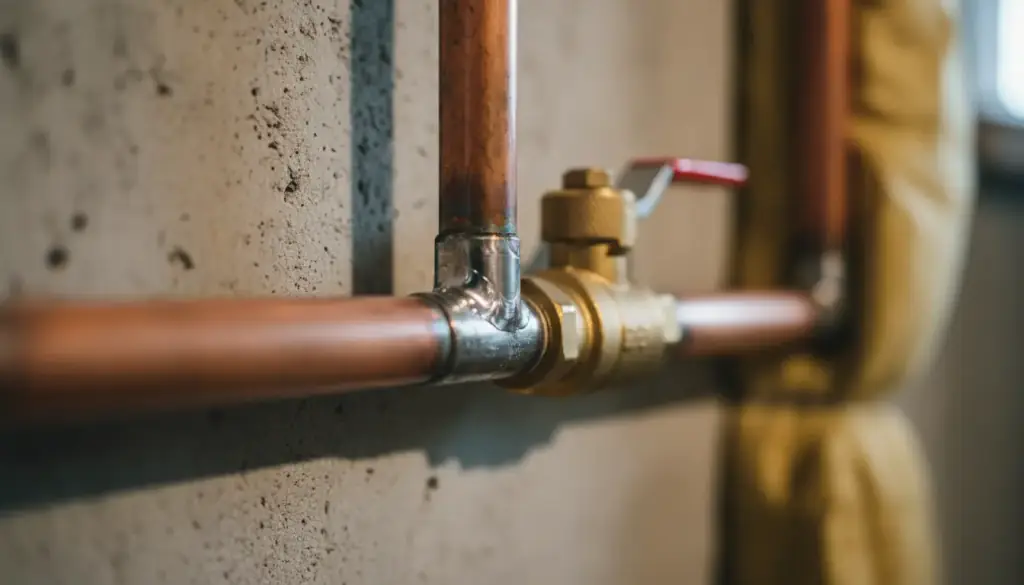
A hard January stretch in North Central Iowa can put a house's plumbing to the test. Once outdoor temperatures stay well below freezing for days at a stretch, any pipe that isn't well protected from the cold is at risk. Knowing what's actually happening inside that pipe, and what to do about it, makes the difference between a quick fix and a much bigger repair.
Why pipes freeze where they do
Water expands by roughly nine percent as it turns to ice. In an open container that's not a problem, but inside a closed length of pipe, that expansion has nowhere to go. Pressure builds between the ice blockage and the nearest closed faucet, and if the pressure gets high enough, the pipe can split, usually along a straight section rather than at the ice itself. Pipes freeze first in the places least protected from outside cold: along exterior walls, in unheated crawl spaces and basements, in attics, in garages, and anywhere a supply line runs close to an outside wall with limited insulation behind it. Farm outbuildings and older homes with uninsulated additions are especially prone to it.
The moment you suspect a freeze
If a faucet that normally runs fine suddenly slows to a trickle or stops entirely during a cold snap, treat it as a likely freeze rather than waiting to see what happens.
- Shut off the main water supply to the house if you can locate it, which limits how much water escapes if the pipe has already split
- Leave the affected faucet open so that as the ice begins to melt, water has somewhere to flow and pressure doesn't build back up
- Apply gentle, steady heat to the suspected section of pipe with a hair dryer, an electric heating pad, or towels soaked in hot water, working from the faucet end back toward the blockage
- Never use a blowtorch, propane heater, or other open flame anywhere near a pipe, especially where insulation, wood framing, or other combustible material is close by
- Keep the area warm generally, opening cabinet doors under sinks along exterior walls so household heat can reach the pipe
Preventing a freeze before it starts
A handful of habits during a hard cold stretch go a long way toward avoiding a freeze in the first place. Letting a faucet on a vulnerable line drip slightly keeps water moving through the pipe rather than sitting still, and a slow trickle also gives a closed system somewhere for pressure to go if ice does start to form further down the line. Opening cabinet doors under sinks along exterior walls lets warmer household air reach pipes that would otherwise sit in a closed, unheated pocket. Garden hoses should come off outdoor spigots and any exterior shutoffs drained before the first hard freeze of the season, since a hose left attached can trap water in the spigot itself. And it's worth knowing where your main shutoff valve is before the night you actually need it in a hurry, rather than searching for it in a cold basement at midnight.
How freeze-shot lets a plumber repair a live line
Once a pipe has actually split, the usual problem with the repair is not the pipe. It is the water behind it. To cut out a damaged section you normally have to shut off the main, drain the system down, make the repair and then refill and bleed everything, which can leave a house without water for hours and, on a hydronic heating loop, means draining and refilling the boiler system too. Freeze-shot is the way around that. The plumber clamps a freezing jacket around the pipe on the supply side of the damage and chills that short section until the water inside it turns into a solid ice plug.
That plug holds back the line pressure like a temporary valve. With the plug in place, the damaged length downstream can be cut out and replaced while the rest of the house stays full of water. When the new fitting is in and checked, the jacket comes off, the plug thaws on its own in a few minutes, and water flows through the repaired section again. The same method is useful for planned work: adding a shutoff valve where there never was one, or replacing a leaking valve on a line that has no other way to isolate it.
It is a job for a plumber with the right equipment, not a homeowner with a can of spray. The freeze has to be placed and held correctly for the pipe size and material, and the plumber has to be sure the plug is solid before cutting into a pressurized line. Done properly, it turns what would have been a drain-down, a refill and an afternoon without water into a much shorter, tidier repair.
Freeze-shot piping installation and repair is part of the residential plumbing work Kinseth Plumbing & Heating does out of Belmond, alongside pipe location, sewer camera inspection and backflow testing, with plumbing done by master plumbers and a one-year warranty on the work. If you've got a frozen line or a pipe that split overnight, call (641) 444-4428 and ask about freeze-shot repair.
Kinseth Plumbing & Heating Inc, (641) 444-4428
Call (641) 444-4428More articles
Hard Water in North Iowa: What It Does to Your Home and When a Softener Pays Off
A plain explanation of hard water, what it costs your fixtures and appliances over time, and how a softener actually works.
Radiant Floor Heat: What to Decide Before the Slab Gets Poured
The decisions that are cheap to make before the concrete goes down and expensive to fix afterward.