Hard Water in North Iowa: What It Does to Your Home and When a Softener Pays Off
A plain explanation of hard water, what it costs your fixtures and appliances over time, and how a softener actually works.
September 23, 2026 · 4 min read
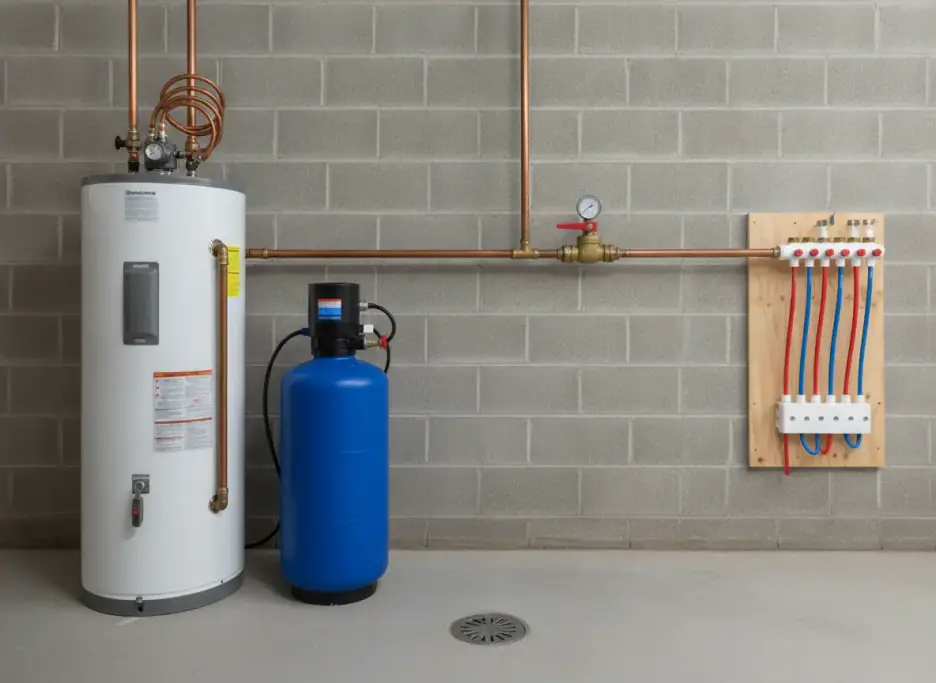
If you've lived in North Central Iowa for any length of time, you've probably noticed the signs even if you didn't know what to call them. White crust building up around a faucet spout. Soap that won't quite lather. A film on glassware straight out of the dishwasher. That's hard water, and it's the water most homes in this part of the state are working with, whether it comes from a private well or a municipal system.
What makes water 'hard'
Water is called hard when it carries a higher concentration of dissolved minerals, mainly calcium and magnesium, picked up as the water moves through soil and rock before it reaches your tap. This isn't dirt and it isn't a contamination problem in the way people sometimes assume. It's mineral content, and it's measured in grains per gallon, or GPG. The higher the GPG number, the harder the water. Iowa groundwater tends to run moderately to significantly hard depending on the well and the local geology, which is why the problem shows up in so many area homes.
What hard water actually does over time
The minerals themselves aren't harmful to drink, but they cause real, gradual wear on a house. As hard water heats up or evaporates, the calcium and magnesium come out of solution and form scale, the same chalky deposit you see building up in a kettle or around a shower head. Inside a home, that scale builds up in places you can't see just as readily as the places you can.
- Water heaters: scale settles on heating elements and tank walls, making the unit work harder to heat the same amount of water and shortening its useful life
- Faucets and shower heads: mineral deposits narrow the openings, which is why flow slows down and spray patterns get uneven over the years
- Pipes: scale can build up on the inside of pipe walls over time, gradually reducing the effective diameter
- Appliances: dishwashers, washing machines, and coffee makers all run harder and wear faster when they're fed hard water
- Soap and detergent: hard water reacts with soap to form a sticky residue instead of a clean lather, which is why you use more soap and still feel a film on your skin
How a water softener actually works
A softener doesn't filter hard water so much as trade it. Inside the tank is a bed of resin beads carrying a charge of sodium or potassium ions. As hard water passes through the resin, the calcium and magnesium ions swap places with the sodium or potassium ions on the beads, a process called ion exchange. The water that comes out the other side carries far less of the mineral content that causes scale and soap film. Over time the resin bed fills up with the minerals it has captured, so the system periodically runs a regeneration cycle, flushing a brine solution through the resin to rinse the captured minerals away and recharge the beads for the next cycle.
When it's worth looking into
Not every home needs a softener, but a few signs are worth paying attention to: soap and shampoo that never seem to rinse clean, spots and film on dishes and glassware even after a full wash cycle, faucets and shower heads that are visibly crusted with white or gray buildup, or a water heater that seems to be working harder than it used to. None of these are emergencies, but taken together they're a reasonable signal that the water coming into your house is carrying more mineral load than your fixtures and appliances would prefer.
Where the system fits and what it needs from you
A softener is usually plumbed in on the main line as water enters the house, ahead of the water heater, so every hot and cold tap in the home receives softened water and the water heater itself is protected from the scale buildup described above. Ongoing upkeep is minor: the brine tank needs salt added periodically, and the resin bed itself is built to hold up over years of daily regeneration cycles before it needs attention. Beyond that, a softener largely runs in the background, doing its job without asking much of the household relying on it.
For households on a private well, hardness can vary quite a bit even between properties a few miles apart, since it depends on the specific aquifer or rock layer the well draws from. That's part of why walking through your actual water use and fixtures with a plumber matters more than leaning on a generic rule of thumb. The right softener size depends on household size, daily water use, and how hard the incoming water actually tests, not a one-size-fits-all guess.
Kinseth Plumbing & Heating has served North Central Iowa from Belmond since 1946, and water softener installation is one of the services their team handles alongside water heater installs and repairs. They carry Rheem equipment, installs are backed by a one-year warranty, and they offer free estimates if you want an honest look at what your home's water is actually doing before you decide anything. Call (641) 444-4428 to talk through your water heater and water softener options.
Kinseth Plumbing & Heating Inc, (641) 444-4428
Call (641) 444-4428More articles
What to Do the Moment a Pipe Freezes in an Iowa Winter
A practical, step-by-step look at frozen pipes in a North Iowa winter, and the ice-plug repair method that lets a plumber work on a line without draining the house.
Radiant Floor Heat: What to Decide Before the Slab Gets Poured
The decisions that are cheap to make before the concrete goes down and expensive to fix afterward.